Trends, ideas, innovations and inspirations about Buenos Aires. A MAP OF WHAT'S GOING ON IN THE CITY.
Wednesday, July 26, 2006
Launching The Uncoolhunter.com / Lanzando The Uncoolhunter.com
Monday, July 17, 2006
Tourism in Mp3 format / Turismo en formato Mp3
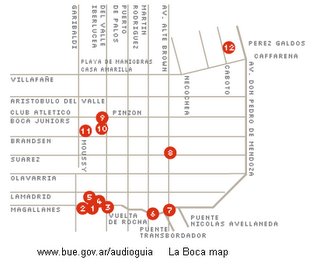
Tourism in Mp3 formatDescription of La Boca circuits stops;
1 - La Boca neighborhood. A neighborhood unique in its architecture and its culture. Historians explain the origins of an area filled with immigrants, tenement houses and football. Duration: 2 min
2 - Quinquela Martin, his house…his life. The great artist Benito Quinquela Martin was one of the most relevant personalities of La Boca. Abandoned by his birth mother in an orphanage of the area, he describes his childhood in the neighborhood. Duration: 2 min
3 - Vuelta de Rocha In its beginnings, La Boca was a city slum, filled with shanties and “pulperias” (general stores). The port activity gave it a definite identity. This is how an old neighbor describes it. The tango “La Vuelta De Rocha” can be listened to as well. Duration: 1 min
4 - Caminito One of the most defining symbols of Buenos Aires hides behind the sheet metal and colorful houses of this little street of La Boca. To listen to: “Caminito”, and what Quinquela Martin thought of this tango piece, which found its inspiration in this place. Duration: 1 min
5 - Juan de Dios Filiberto, tango in La Boca. Juan de Dios Filiberto, who wrote the music for “Caminito”, is a synonym of tango in La Boca. Filiberto gives his opinion on the lyrics of his tango pieces. Duration: 1 min
6 - Museum of Fine Arts (Museo de Bellas Artes) Benito Quinquela Martin donated this building to the neighborhood that most inspired his art. The artist himself tells us the purpose of this museum and Perez Celis describes Quinquela as an artist. Duration: 1 min
7 - The Bridge of La Boca, a postcard scene. One of the outstanding symbols of the neighborhood of La Boca is this majestic iron bridge constructed over the Riachuelo. Quinquela Martin chose it as scenery for many of his paintings. Duration: 1 min
8 - The Republic of La Boca Throughout history, there were three attempts to found the Republic of La Boca. This is what Hugo Banchero, grandson of one of the founders, and historian Jose Gobello, tell us. Duration: 2 min
9 - Boca Juniors Sports Club. The history of one of the most important football teams in Argentina. Listen to Maradona talking about Boca Stadium and artist Perez Celis describing why he did the murals at the Club. Duration: 2 min
10 - Player number 12 The sound of the voice of the fans is felt at Boca Stadium like in no other stadium. This passion for football inspired films like “El hincha” (The Fan), with Enrique Santos Discepolo. A fragment of this movie and the voice of Diego Maradona talking to the Boca fans. Duration: 2 min
11 - Maradona, the story of an outstanding figure. The biography of one of the most famous football players in the world. To listen to: The most memorable goal of Maradona in the 1986 World Cup broadcast by Victor Hugo Morales, and National Team player number 10 telling us himself what glory means to him. Duration: 3 min
12 - Catalinas warehouse, “murga” culture. By means of theater, a group of people from La Boca recover the history of the neighborhood. A fragment of the show El Fulgor Argentino and an interview with its director, Adhemar Bianchi. Duration: 2 min
Turismo en formato Mp3
En Buenos Aires ya no hace falta un guía para recorrer sitios históricos y turísticos.
Descripción de los recorridos en La Boca;
1 - Barrio de La Boca Un barrio único en su arquitectura y en su cultura. Historiadores explican cómo fue el origen de esta zona de fútbol, conventillos e inmigrantes. Duración: 1 min
2 - Quinquela Martín, su casa… su vida El magnífico pintor Benito Quinquela Martín fue una de las figuras más relevantes de La Boca. Abandonado por su madre natural en un orfanato de la zona, él mismo cuenta cómo fue su infancia en el barrio. Duración: 2 min
3 - Vuelta de Rocha En sus comienzos, La Boca era apenas un arrabal poblado por ranchos y pulperías. Fue la actividad portuaria lo que le dio una identidad definida. Así lo describe un viejo vecino del barrio. Además el tango “La Vuelta de Rocha” para escuchar. Duración: 1 min
4 - Caminito Uno de los mayores símbolos de Buenos Aires se esconde entre las chapas coloridas de las casas de esta callecita de La Boca. Para escuchar: “Caminito” y lo que pensaba Quinquela del tango inspirado en este lugar. Duración: 1 min
5 - Juan de Dios Filiberto, tango en La Boca Juan De Dios Filiberto —autor de la música de “Caminito”— es sinónimo de tango en La Boca. Filiberto opina de las letras de sus tangos. Duración: 1 min
6 - Museo de Bellas Artes Benito Quinquela Martín donó este edificio al barrio que le sirvió como fuente de inspiración. Él mismo cuenta cuál era su objetivo con este museo y Pérez Celis describe a Quinquela como artista. Duración: 1 min
7 - El puente de La Boca, una postal Uno de los mayores símbolos del barrio de La Boca es este imponente puente de hierro que se alza sobre el Riachuelo. Quinquela Martín lo eligió como escenario de muchas de sus pinturas. Duración: 1 min
8 - La República de La Boca A lo largo de la historia tres veces intentaron fundar La República de La Boca. Así lo cuentan Hugo Banchero, nieto de uno de los fundadores, y el historiador José Gobello. Duración: 2 min
9 - Club Atlético Boca Juniors La historia de uno de los clubes de fútbol más importante de la Argentina. Escuchá a Maradona hablando del estadio de Boca y el artista Pérez Celis contando porqué realizó los murales del club. Duración: 2 min
10 - El jugador número 12 La voz de los fanáticos se siente en el estadio de La Boca como en ningún otro. La pasión por el fútbol inspiró películas como El hincha, con Enrique Santos Discépolo. Un fragmento de la película y la voz de Diego Maradona hablándole a la hinchada de Boca. Duración: 2 min
11 - Maradona, la historia de un grande La biografía de uno de los jugadores de fútbol más famosos del mundo. Para escuchar: el gol más recordado de Maradona en el mundial de 1986 relatado por Víctor Hugo Morales y el mismo número 10 de la selección cuenta qué es para él la gloria. Duración: 3 min
12 - El Galpón de Catalinas, la cultura de la murga Por medio del teatro, el grupo de vecinos de La Boca recupera la memoria del barrio. Un fragmento del espectáculo El fulgor argentino y una entrevista a su director, Adhemar Bianchi. Duración: 2 min
Tuesday, July 04, 2006
Ugi's Pizza Campaign
Ugi’s pizza Campaign at no traditional places.
Ugi’s pizza shop launched with the agency “La Age”( http://www.laage.com.ar/ ) a promotional campaign of marketing that consists on posters in the streets in places, that in general aren’t common for this kind of things. Ugi’s breaks traditional advertisements, sticking posters/stickers on public telephones, cars, escalators at shopping malls, automatic cash dispenser and bus stops.
It is a campaign that works in places that people isn’t used to watch carefully and the fact is to surprise when they are seen.
colectivos.Wednesday, June 21, 2006
CLUB 69
CLUB 69
Perfect to satisfy the anxiety for fun to the refined spirits, Club 69 is the most glamorous party in Buenos Aires with the bests DJs of the city. Performances by the fabulous “Unstable 60 Company” and the B Boys skill of the “69 Crew” mix a rare urban style with humoristic and groove accompanied y the best electronic music.
WWW.NICETOCLUB.COM
CLUB 69
Perfectas para saciar las ansias de diversión de los espíritus más refinados y glamorosos, las fiestas del Club 69 suman los mejores DJS de Buenos Aires al desenfado de los performers de la fabulosa “Compañía inestable del 69” y la destreza de los B Boys de la “ Crew 69” en una llamativa mezcla de lo urbano, lo humorístico y el groove de la mejor música electrónica.
WWW.NICETOCLUB.COM
Friday, June 02, 2006
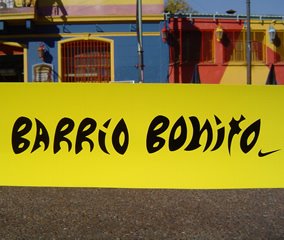
"Barrio Bonito" The Pretty District will be able to be visited / "Barrio Bonito" puede empezar a visitarse.
"Barrio Bonito" The Pretty District will be able to be visited.
An idea developed by BBDO for Nike Argentina that was chosen by Nike International like one of the three more important global initiatives for the campaign Glass of World 2006.
In occasion of the arrival of World-Wide Germany 2006 soccer championship, some artistics pieces took part the district “Barrio de la Boca” in Buenos Aires with thematic soccer like main by Nike and BBDO Ad agency. The objective is generate a legacy and an authentic contribution to the life of the place.
In “Barrio Bonito” the spirit of the soccer of district and the art conjugate themselves, with the Nike contribution in terms of the “Joga Bonito” world campaign that world-wide is associated to the pretty game. “We are in the Third Era of the advertisement, thus we
understand it in the agency with each project that we faced: the technology, the entertainment, the interactive participation of the person, is defining a different scene completely. The real experience for the people is to make the district “Barrio Bonito” within a district. This district came real because of the joy and the commitment of the inhabitants of “La Boca”.
The initiative exceeds the symbolic benefit of the brand and take it to the point that the Government of the City sees it like tourist value. BBDO work in equipment with a client with a capacity of unusual vision. All this fills to us of much pride”, indicated Carlos Perez, President of BBDO Argentina.
“We were with a global campaign that it very hard has a concept in soccer, “Joga Bonito”, but that in our country generates emotions quite polarizing because its associated with the “Brazil soccer”. The challenge went to transfer it to our streets, being generated actions with much local relevance. An idea that does not come in brief became real to make “Barrio Bonito”. An idea that required long
working time with Nike as well as with the authorities of the City and the involved artists. “Barrio Bonito” is neither a commercial one, nor a graph, nor nothing similar. We worked with a new concept: the Artvertising”, indicated Nicolas Pimentel, Accounts Director of BBDO Argentina.
Throughout the Garibaldi street between the streets Lamadrid and Quinquela, to meters of “Caminito”, BBDO and Nike implemented a series of actions between which they stand out: First interactive monument: an invitation to became real the best goal of the history of the world-wide ones: the goal of Maradona to the England in México world wide Championship in 1986 with its six players represented in statues. The monument is completed with one making the route of Diego Maradona.
Tevez x Gasparini: The most iconic artist of the district of “La Boca”, Omar Gasparini, author of the sculptures to Maradona, Evita and Gardel, portrayed this time to Carlos Tevez, hero of the district and the soccer team “Boca Juniors”.
Art with the Feet: Artists pertaining to the Association of Artists with the Mouth and the Foot, Antonella Semaán and the Spanish Manuel Parreño, reflected the magic of soccer. Their works of Carlos Tevez and Ronaldinho, also two artists of the feet, are exposed on murals in the Garibaldi street.
Murals: The linen cloth is the wall, the brush the ball. This piece was called “Pelotazos”, Tevez, Agüero and Ronaldinho left to printings their pictures on murals in a new test of which they are able to do with the feet.
Photographic exhibition: Urko Suaya, Alexander Burset, Marks Lopez, Ricardo Alfieri, Martin Sigal and Fabian Laghi portrayed their personal conception of each one of the five values of the game for Nike: it drags, ability, joy, honor and equipment. “Barrio bonito” has been considered of high tourist value by the organizations of “La Boca” and the Government of the City.
From Monday the tour guides will include the” barrio Bonito”in their routes like attractive an additional one of the neighboorhood.
"Barrio Bonito" puede empezar a visitarse. A partir de hoy se podrá visitar el Barrio Bonito, una idea desarrollada por BBDO para
Nike Argentina que fue elegida por Nike Internacional como una de las tres iniciativas globales más importantes para la campaña Copa del Mundo 2006. Con motivo de la llegada del Mundial Alemania 2006, Nike y BBDO intervinieron artísticamente el barrio de "La Boca" con el fútbol como temática principal, con el objetivo de generar un legado y un aporte auténtico a la vida del lugar. En "Barrio Bonito" se conjugan el espíritu del fútbol de barrio y el arte, de la mano de una marca que mundialmente se asocia al juego bonito. "Estamos en la Tercera Era de la publicidad. Así lo entendemos en la agencia con cada proyecto que encaramos: la tecnología, el entretenimiento, la híperparticipación de la persona, están definiendo un escenario completamente diferente. Hacer un Barrio dentro de un barrio; hacerlo con la gente del lugar; ver la alegría y el compromiso de los habitantes de La Boca; convertir la iniciativa en algo que excede el beneficio simbólico para una marca y llevarlo al punto de que el Gobierno de la Ciudad lo vea como valor turístico; trabajar realmente en equipo con un cliente con una capacidad de visión y coraje inusuales, todo esto nos llena de mucho orgullo", señaló Carlos Pérez, Presidente de BBDO Argentina. "Nos encontramos con una campaña global que tiene un concepto muy fuerte en el fútbol, Jogo Bonito, pero que en nuestro país genera emociones bastante polarizantes. El desafío fue trasladarlo a nuestras calles, generando acciones con mucha relevancia local. Y así surgió la idea del Barrio. Una idea que no viene en un brief. Una idea que requirió mucho tiempo de trabajo con Nike así como con las autoridades de la Ciudad y los artistas involucrados. Barrio Bonito no es ni un comercial, ni una gráfica, ni nada parecido. Trabajamos con un nuevo concepto: el Artvertising", señaló Nicolás Pimentel, Director de Cuentas de BBDO Argentina. A lo largo de la calle Garibaldi entre las calles Lamadrid y Quinquela, a metros de Caminito, BBDO y Nike implementaron una serie de acciones entre las que se destacan: Primer monumento interactivo: una invitación a revivir el mejor gol de la historia de los mundiales: el gol de Maradona a los ingleses con sus seis jugadores representados en estatuas. El monumento se completa con uno realizando el recorrido de Diego. Tevez x Gasparini: El artista más icónico del barrio de La Boca, Omar Gasparini, autor de las esculturas a Maradona, Evita y Gardel, retrató esta vez a Carlos Tevez, ídolo del barrio. Arte con los Pies: Artistas pertenecientes a la Asociación de Artistas con la Boca y el Pie, Antonella Semaán y el español Manuel Parreño, reflejaron la magia del fútbol. Sus obras de Carlos Tevez y Ronaldinho, también dos artistas de los pies, están expuestas sobre murales en la calle Garibaldi. Murales: El lienzo es la pared, el pincel la pelota. Mediante pelotazos, Tevez, Agüero y Ronaldinho dejaron estampados sus retratos sobre murales en una nueva demostración de lo que son capaces de hacer con los pies. Exposición fotográfica: Urko Suaya, Alejandro Burset, Marcos López, Ricardo Alfieri, Martin Sigal y Fabián Laghi retrataron su concepción personal de cada uno de los cinco valores del juego para Nike: garra, habilidad, alegría, honor y equipo. El Barrio Bonito ha sido considerado de alto valor turístico por las organizaciones de La Boca y el Gobierno de la Ciudad. Desde el lunes las guías turísticas incluirán al Barrio Bonito en sus recorridos como un atractivo adicional de la zona.Friday, May 26, 2006
A Snapshot on fairs in Buenos Aires / Radiografía de las ferias de Buenos Aires
A Snapshot on fairs in Buenos Aires .
Buenos Aires currently boasts fairs that have become true emblems of the city and imbue the neighboorhoods where ther are held with deepes identity.
The fair held at Plaza Cortazar also known as Placita Serrano, stands out for its unconventional items, which are different from those offered by most fairs in other points of the city. This is a place where design, innovation, non-standard cloting and unconventional fabrics and models are dominant. In Recoleta, the never-ending Plaza Francia manages to make the already vibrant grass-carpeted scenery even more colorful with its array of arts and crafts stands.
San Telmo, boasts its antiques fair, where the most unthinkable items can be found as if they were floating amid the neighboorhood's typical inmigrant quarter atmosphere. The area retained its colonial architecture: standing among these constructions, the fair on Plaza Dorrego is like a huge shop window that displays extremely ancient lamps as well as jewelry, period clothes, books and other objects that can make us travel through time just by catching our eye.As a result of the large number of visitors that this fair receives every weekend, stands have spread out to neighboring streets, adding more crafts novelties. The atmosphere of this spot is enriched by tango dancers, musicians and human statues that pass the hat around after their perfomances. The nearby streets afford a combination of cafés, restaurants, and prestigious antique stores.The San Pedro Telmo fair is one of the major sights around town and has become increasingly advertised over the past few years. With the characteristic odor - which is reminiscent of things retrieved from old chests - , its cobbled streets, its well-preserved architectural heritage and its bohemian air, this fair fascinated tourists and is a source of pride for Buenos Aires locals.
La de Plaza Cortazár, la placita Serrano, se destaca por sus artículos no convencionales, distintos a los que ofrecen la mayoría de ferias de diferentes puntos de la ciudad. Aquí impera el diseño, las novedades, la ropa no estandarizada, las telas y modelos menos convencionales. En Recoleta, la interminable feria de Plaza Francia aporta aún más colorido, con sus puestos de artesanos, al pasto que alfombra este espacio abierto.
Mientras que San Telmo tiene sus ferias de antiguedades en donde los más impensados objetos añejos se pueden encontar flotando en ese aire de arrabal. El barrio conserva su arquitectura colonial y en medio de dichas construcciones la feria, ubicada en la Plaza Dorrego, es una inmensa vidriera que reúne antiquísimas lámparas, joyas, vestidos de época, libros y demas objetos que con solo contemplarlos nos traslada en el tiempo. Por la cantidad de visitantes que recibe la feria cada fin de semana se han extendido los puestos a pasajes aledaños que agregar artesanías y novedades. La atmosfera de este paseo se completa con los bailarines de tango, músicos y estatuas vivientes que brindan espéctaculos " a la gorra". Las veredas de alrededor alternan cafés, restaurantes y anticuarios prestigiosos. La Feria de San Pedro Telmo es uno de los atractivos turísticos de la ciudad. Con su olor característico de objetos rescatados de viejos baúles, sus calles empedradas, su patrimonio arqutectónico bien conservado y su aire bohemio, fascina al turista y enorgullece al porteño.
Tuesday, May 09, 2006
Alcoholic Beverages Delivery in Buenos Aires / Delivery de bebidas alcohólicas en Buenos Aires
Proyecto V
Tuesday, April 25, 2006
Personalization: customers mould products considering their likes / Personalización: Los clientes moldean productos a gusto
With the need of solving demands, a new trend appears in Buenos Aires. The personalization of products. The market pamper the customers so that they buy, adapting to their caprices. It is in fashion the “Make it yourself” as a new motto of marketing. The prices of this “personalization” can fly as high as consumer’s imagination. This added value has the help of the web, and really soon the product passes from the virtual space to the physic one. Many enterprises are working with this trend, which allows, for example, to prepare a car Suzuki FUN , Nike, trainers ring tones and personalized mobile phones Motorola, Mtv , teas and perfumes, comics Libros personalizados , diaries with photos Cecilia Lombardo Agendas, printings of packaging. This trend treats the client as someone unique, special. It doesn’t matter if the rules of the good taste are broken, the idea is that the client always is true.Thursday, April 20, 2006
Buenos Aires, a new anti tobacco wave / Buenos Aires en una nueva oleada anti tabaco
Wednesday, April 19, 2006
Buenos Aires Misteriosa
The Cromañon Effect, Buenos Aires / La noche de Buenos Aires cambió por el efecto Cromañon
In Business: Las Villas "Miseria" / La Villa, una usina de negocios rentables